

10 Proven Strategies to Increase Average Order Value for Ecommerce in 2026
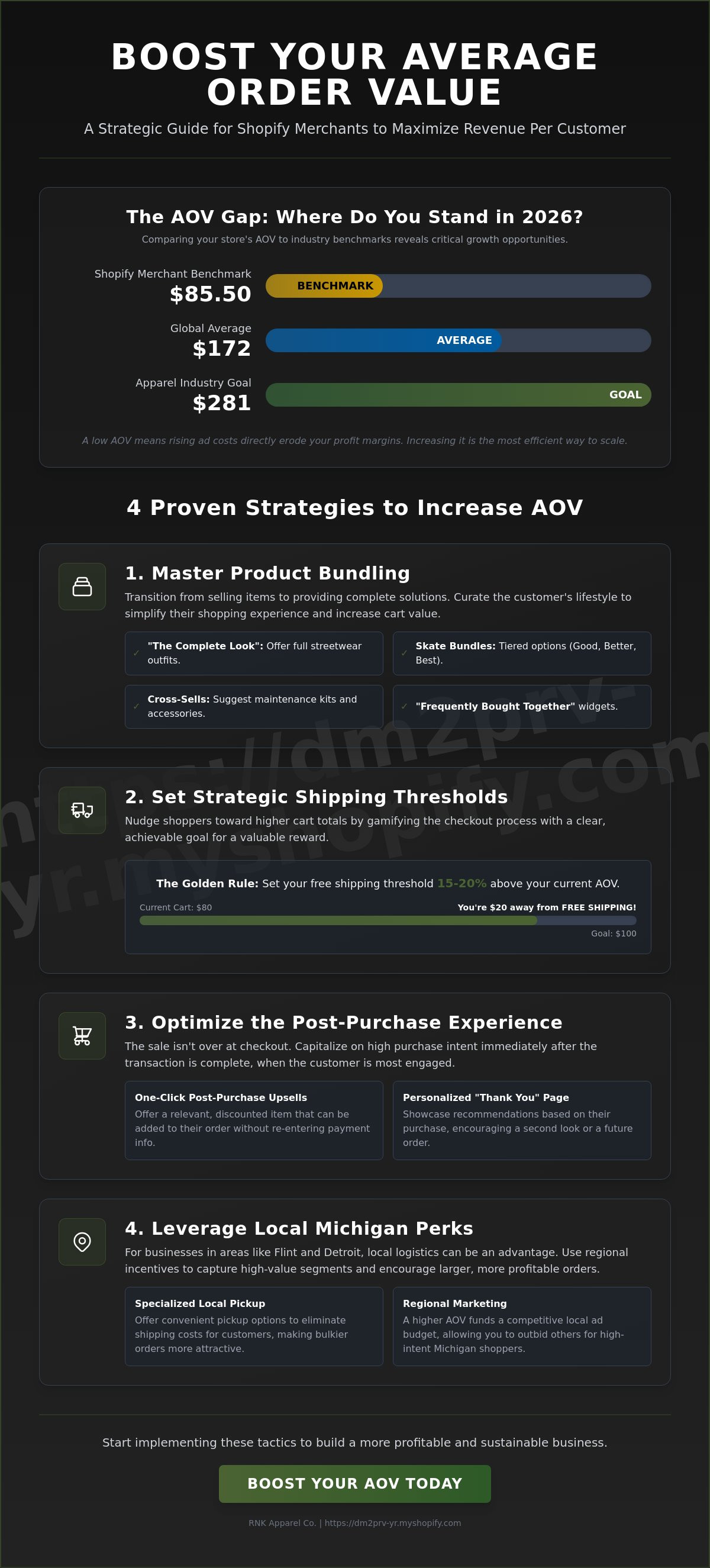
Did you know that while the global average order value has climbed as high as $172 in 2026, many Shopify merchants are still fighting to break past a benchmark of $85.50? If your business is stuck in that lower bracket, it's essential to implement proven strategies to increase average order value before rising Meta and Google ad costs erode your profit margins completely. It's frustrating to pay a premium for traffic only to see customers check out with a single, low-margin item that barely covers the shipping costs.
You aren't alone in feeling this pressure. Many ecommerce leaders are currently grappling with the reality of more deliberate shopping behavior and the complexities of new regulations like Michigan's SB 351. This guide promises to help you master the exact tactics needed to boost your store revenue per customer. We will break down how to leverage advanced product bundling, strategic free shipping thresholds, and local Michigan-centric incentives to drive higher transaction values and secure a better ROI on every dollar you spend.
Key Takeaways
- Calculate your baseline AOV to identify exactly how much revenue is lost to shipping and acquisition costs on single-item orders.
- Implement "The Complete Look" bundling for streetwear and skate gear to encourage customers to purchase matching accessories alongside their main items.
- Discover how to set free shipping thresholds 15-20% above your current average to naturally nudge shoppers toward higher cart totals.
- Deploy high-converting strategies to increase average order value like one-click post-purchase upsells and personalized "Thank You" page recommendations.
- Use local Michigan-centric incentives, such as specialized local pickup options, to drive bulkier orders from high-value regional segments.
Understanding the AOV Formula and Its Impact on Profitability
Average Order Value (AOV) is the average dollar amount a customer spends every time they place an order on your website. It's a simple calculation: divide your total revenue by the number of orders received over a specific period. While many brands obsess over traffic volume, smart merchants focus on AOV because it's the most efficient lever for scaling. You've already paid for the customer to arrive at your store; getting them to add one more item to their cart is essentially "free" revenue compared to the high cost of acquiring a new shopper.
In 2026, the relationship between AOV and Customer Acquisition Cost (CAC) has become a survival metric. With Meta and Google ad costs continuing to climb, a low AOV can quickly lead to negative margins. By focusing on strategies to increase average order value, you improve your Customer Lifetime Value (CLV) from the very first interaction. Upselling is a sales technique used to encourage customers to purchase a higher-end version of the item they are considering, which directly inflates this number without requiring a single cent of additional ad spend.
Calculating Your Baseline AOV in 2026
To start, pull your data from the Shopify analytics dashboard under the "Average Order Value" report. Don't just look at the total number. Segment your AOV by customer type to see the difference between new and returning shoppers. Returning customers often have a higher AOV, but if yours is lagging, it's a sign you need better loyalty incentives. For those in the fashion and apparel industry, aim for the 2026 benchmark of $281. If you're closer to the Shopify global average of $85.50, you have significant room for growth.
Why AOV is Critical for Michigan Small Businesses
For businesses operating in the Flint and Detroit metro areas, local logistics present unique challenges. Shipping costs for small, single-item packages have risen, making it difficult to maintain margins on low-value orders. Increasing your AOV creates a "profit cushion" that protects you against these shipping spikes and supply chain fluctuations. When your average transaction is higher, you can afford a more competitive local marketing budget. This allows you to outbid competitors for high-intent Michigan shoppers while still maintaining healthy profit margins. High AOV isn't just a vanity metric; it's the fuel that allows a local brand to scale sustainably.
Mastering Product Bundling and Upselling for Streetwear & Skate Gear
Streetwear and skate culture are built on a blend of aesthetics and utility. When a customer lands on your site looking for a new deck, they rarely need just the wood. They need the trucks, wheels, bearings, and grip tape to actually ride. By focusing on Mastering Product Bundling and Upselling, you transition from selling individual components to providing a complete solution. This isn't just about moving more inventory; it's about curated lifestyle curation that simplifies the shopping experience for your core audience.
The "Complete Look" psychology is particularly potent in 2026. Consumers are increasingly deliberate with their spending but also value their time. They want to know that the hoodie they're buying matches the jeans and hat perfectly. Using "Buy the Look" features allows you to map logical accessory paths. If someone views a pair of jeans, a "Frequently Bought Together" widget should immediately suggest a complementary belt or a graphic tee. These are essential strategies to increase average order value because they capitalize on the customer's existing intent without feeling like a forced sales pitch.
Creating High-Value Skateboard Bundles
Skateboarders often look for a deal when building a new setup. You can capitalize on this by offering tiered bundling options: Good, Better, and Best. A "Good" bundle might include a standard shop deck with entry-level trucks and wheels, while the "Best" bundle features pro-model components. Always offer a "Complete" discount when a customer buys a deck, trucks, wheels, and bearings together. To help them make an informed choice, link to your Skateboard Hardware Guide within the product description. Don't forget to cross-sell maintenance kits like skate tools or spare hardware at the point of purchase. It's a small add-on for them, but these are the exact strategies to increase average order value that build long-term profitability.
Curating Streetwear Outfits to Drive AOV
Streetwear shoppers often buy into a brand's specific vibe. If a customer is looking at Volcom or Obey jeans, your system should automatically suggest matching hoodies or hats from the same collection. Another effective tactic is the "Season Starter" kit or a "Mystery Box" containing a mix of tees and accessories. These curated sets move slower inventory while providing high perceived value to the shopper. For those close to a shipping threshold, use in-cart prompts like "Add a pair of socks to reach free shipping." These micro-conversions are easy wins for any store. If you're looking to refresh your own inventory with these strategies in mind, explore our latest collections to see these pairings in action.
Implementing Spending Thresholds and Gamified Incentives
Thresholds are one of the most effective psychological tools in your arsenal. When a shopper sees they are only a few dollars away from a perk, their behavior shifts from "buying a product" to "unlocking a reward." This transition is vital for ecommerce brands in 2026. By setting clear spending goals, you provide a roadmap for the customer to follow. These strategies to increase average order value don't just happen; they require careful planning and visual reinforcement to be successful.
The free shipping threshold is the gold standard of these incentives. To find your "sweet spot," look at your current AOV and set the threshold roughly 15 to 20 percent higher. If your average order is $85, setting free shipping at $100 creates an attainable goal that encourages users to add a small accessory or a higher-quality component to their cart. Following the best practices of upselling ensures that these suggestions feel helpful rather than intrusive. You can also implement tiered discounts, such as "Spend $100, Save $10" or "Spend $200, Save $30," to reward larger carts. For items where margins are tight, a free gift with purchase (GWP) often works better than a discount. A branded sticker pack or a small tool kit has a high perceived value for the customer but costs the business very little.
Calculating Your Ideal Shipping Threshold
Finding your median order value is the first step to setting a threshold that actually moves the needle. You want a number that is high enough to increase your margin but low enough that it doesn't cause cart abandonment. For Michigan-based businesses, this is particularly important when analyzing shipping zones from Grand Rapids to Brighton. You need to ensure that the increased order value actually covers the cost of "free" shipping across the state. Test different thresholds in $5 increments to find the exact point where conversion rates stay steady while the average transaction value climbs.
Gamifying the Shopping Experience
Visual cues are essential for keeping customers engaged with your incentives. Use a progress bar in the cart that fills up as more items are added. This "nudge" provides immediate feedback and creates a sense of accomplishment when the goal is reached. You can even offer "Unlockable Rewards" like exclusive access to limited-edition drops once a certain spend is hit. For local shoppers in Flint or Fenton, consider using limited-time "Flash AOV" boosters. These could include loyalty point multipliers for high-ticket items like pro-grade skateboards. Gamification turns a standard transaction into a rewarding experience, making it one of the most powerful strategies to increase average order value in a crowded market.
Optimizing the Checkout and Post-Purchase Experience
Most ecommerce owners think the sale ends the moment a customer hits the "Pay Now" button. In reality, the period immediately following a transaction is when a shopper's trust and engagement are at their peak. One-click post-purchase upsells have emerged as the highest-converting strategies to increase average order value in 2026. Because these offers don't require the customer to re-enter their credit card details, the friction is virtually non-existent. You can present a complementary product that enhances their initial purchase without any risk of losing the original sale.
Before the customer even reaches the final confirmation, your cart should be working to nudge totals higher. Small, impulse-buy items are perfect for this stage of the journey. Think about low-cost essentials like skate wax, extra shoelaces, or branded stickers. These are easy "yes" decisions that shoppers make without much hesitation. If you want to see how these small additions can transform a cart's value, shop our latest accessories to find perfect impulse-buy candidates for your own store.
The Power of the Post-Purchase Nudge
The "Thank You" page should be a gateway to the next purchase, not just a receipt. Offer a "Join the Crew" discount on a second item immediately after checkout to reward the customer's loyalty. For local shoppers in Brighton or Grand Rapids, you can even use SMS notifications to suggest adding a small item to their order before it ships. Digital add-ons like order protection or extended warranties also serve as low-overhead boosters that increase the total transaction value with zero inventory risk.
Technical Setup for Shopify Merchants
Implementing these features requires a modern tech stack. In 2026, Shopify merchants should utilize apps that support dynamic upselling and agentic AI to predict customer needs. Don't forget to A/B test your checkout offers to see which items resonate most. Measure your "Take Rate" alongside total revenue to understand which strategies to increase average order value are truly moving the needle. Finally, ensure your mobile checkout is flawless, as skate-on-the-go shoppers won't tolerate a clunky interface during a high-value purchase.
Leveraging Local Michigan Perks to Boost Your Store’s AOV
Detroit and Flint shoppers represent more than just a demographic; they're the backbone of your brand's regional presence. These customers often show higher loyalty because they share your local identity and values. By focusing your strategies to increase average order value on this segment, you capitalize on existing trust. Local customers are more likely to commit to larger, bulkier orders when they know the business is right in their backyard and understands their specific needs.
Regional pride is a powerful motivator that you can use to curate high-value experiences. Whether it's through community-specific bundles or exclusive local events, the goal is to make the customer feel like part of an inner circle. When shoppers feel a personal connection to a brand, they're less price-sensitive and more willing to invest in premium gear and comprehensive outfits. This local focus helps you stand out in a sea of faceless national retailers.
Local Pickup as an AOV Driver
Offering "Free Local Pickup" in areas like Fenton or Flint is a game-changer for your profit margins. When customers don't have to worry about shipping fees, they often redirect those savings back into their cart to buy more gear. Promoting "Buy Online, Pickup In-Store" (BOPIS) is especially effective for high-ticket items like complete skateboards. It removes the anxiety of potential shipping damage and gets the equipment into their hands faster. For those who can't make the drive, you can still highlight your efficiency through the Fast Shipping Skateboard Gear guide, which outlines how quickly Michigan residents receive their orders. Hosting "Pickup Parties" in Grand Rapids or Brighton further bridges the gap between your online store and the local community, turning a simple order collection into a social event that naturally encourages additional impulse buys.
Community-Focused Bundling
You can drive higher transaction values by creating curated collections like "Detroit Streetwear" or "Michigan Winter" kits. These bundles should solve specific local problems, such as staying warm during a Midwest January while maintaining a specific skate aesthetic. Partnering with local skate parks for exclusive "Member Bundles" also helps you reach high-intent shoppers who are ready to spend more on professional-grade equipment. Using local landmarks in your marketing photography builds an immediate connection that generic stock photos can't match. When a shopper in Michigan sees a brand that understands their environment, they're more comfortable investing in high-value carts. These localized strategies to increase average order value ensure that your growth is rooted in a loyal, sustainable community.
Future-Proof Your Ecommerce Growth Today
Scaling your business in 2026 requires more than just high traffic; it demands a surgical focus on the value of every transaction. By moving beyond generic pop-ups and embracing curated bundles, spending thresholds, and post-purchase nudges, you can transform your profit margins. These strategies to increase average order value are especially powerful when you leverage local advantages. Whether you're optimizing for the Flint and Detroit metro areas or scaling globally, the goal is to provide more value to the customer while protecting your bottom line from rising acquisition costs.
We put these principles to work every day by offering curated pro-grade skateboard hardware and ensuring fast shipping across Michigan. If you're near Flint or the Detroit area, you can even use our local pickup options to skip the wait and grab extra gear with your savings. Ready to see how a high-value shopping experience looks in practice? Explore our latest Skate & Streetwear collections to see these strategies in action! Building a profitable store is a marathon, and focusing on AOV is the most reliable way to stay ahead of the pack.
Frequently Asked Questions
What is a good Average Order Value for a skate shop?
A competitive AOV for a skate shop typically sits between the Shopify global benchmark of $85.50 and the broader fashion industry average of $281. Since skate shops sell a mix of low-cost hardware and high-ticket completes, your target should ideally exceed $100. Monitoring this specific range helps you understand if customers are purchasing single components or investing in full setups that drive higher margins.
Will increasing my AOV hurt my conversion rate?
Increasing your order value won't hurt your conversion rate if the tactics you use add genuine value rather than friction. While aggressive pop-ups can be distracting, subtle strategies to increase average order value like "Frequently Bought Together" widgets often improve the user experience. By helping customers find matching accessories or necessary hardware, you make the purchasing process more convenient, which can keep your conversion rates stable.
How often should I change my free shipping threshold?
You should review your shipping threshold quarterly or whenever your carrier rates fluctuate. In 2026, rising logistics costs mean a threshold set even six months ago might be eating into your profit margins. Test small $5 to $10 adjustments to see how they impact your cart totals. Always ensure your threshold remains roughly 15% to 20% above your median order value to encourage that final add-on.
What are the best products to use for cross-selling in streetwear?
Small, high-margin accessories like socks, beanies, and branded sticker packs are the most effective cross-sell items. These products require very little deliberation and often help a shopper reach a free shipping goal. Since streetwear is focused on a specific aesthetic, suggesting a matching hat or belt when a customer views a hoodie is a reliable way to increase the number of items in every order.
Can I increase AOV without offering discounts?
Yes, you can drive higher order values through curation and convenience instead of price cuts. Tactics like "Buy the Look" features or offering free local pickup in Michigan allow customers to spend more on gear without expecting a markdown. Providing expert guides or assembly services for pro-grade skateboards also adds enough perceived value that customers feel comfortable spending more per transaction without needing a discount code.
How do I track AOV for local Michigan customers specifically?
Use the "Sales by Billing Location" report in your Shopify analytics to filter results by state and specific cities. This allows you to isolate performance data for Detroit, Flint, and Grand Rapids. By segmenting this data, you can see if your local incentives, such as pickup parties or community bundles, are successfully driving higher transaction values compared to your national shipping average.
What is the difference between upselling and cross-selling?
Upselling encourages a customer to buy a more expensive version of the same item, such as a pro-model deck instead of a standard shop deck. Cross-selling involves suggesting related items that complement the original purchase, like adding grip tape or a skate tool to a deck order. Both are essential strategies to increase average order value, but they target different psychological triggers during the journey.
How does AOV impact my Shopify store’s bottom line in 2026?
AOV directly dictates your profitability by offsetting the high cost of customer acquisition. In 2026, with ad costs rising on major platforms, a higher AOV means you earn more profit from every visitor you've already paid to attract. It provides a necessary cushion against inflation and shipping spikes, ensuring that your business remains sustainable even when market conditions become volatile or more competitive.
Disclaimer
Some content published on this website may be developed with the assistance of AI-powered research and writing tools to help streamline research, organization, and content creation. All articles are reviewed, edited, and approved by Marvin Growth Partners to ensure they align with our perspectives, experience, and intended messaging.
While we strive to provide accurate and up-to-date information, blog content is intended for informational and educational purposes only and should not be considered legal, financial, or professional advice. Readers should independently verify information and consult qualified professionals when appropriate.