

Action Sports Ecommerce Marketing: The 2026 Guide to Scaling Your Brand
Did you know that action sports micro-influencers currently drive 20% to 30% higher conversion rates on promotional links than celebrity athletes? This statistic reveals a massive shift in 2026. The era of the untouchable pro is fading, replaced by the power of the local hero. Successfully executing action sports ecommerce marketing now requires more than just high-budget film parts. It demands a strategy that balances technical performance with the raw, unscripted authenticity your community craves.
You probably recognize that staying relevant means more than just having the best gear on the shelf. It's a constant battle to translate "street cred" into digital conversions while fighting off big-box competitors. This guide promises to help you master the specific digital strategies needed to grow an authentic brand in a crowded market. We'll cover everything from AI-driven fit calculators that slash return rates to navigating the latest anti-greenwashing regulations, ensuring your brand remains both profitable and respected. By the end, you'll have a roadmap to increase your return on ad spend and build a community that stays loyal for the long haul.
Key Takeaways
- Learn why 2026 requires a transition from product-centric selling to a community-first model to maintain long-term brand relevance.
- Master the balance between raw, authentic content and high-performance landing pages to convert traffic without losing brand trust.
- Use action sports ecommerce marketing to build automated email lifecycles that guide customers from their first purchase through years of gear upgrades.
- Explore how dominating regional markets like Michigan through local park culture can drive higher engagement than generic national ads.
- Curate a strategic product mix of core industry brands to establish authority with technical experts while remaining accessible to beginners.
The State of Action Sports Ecommerce Marketing in 2026
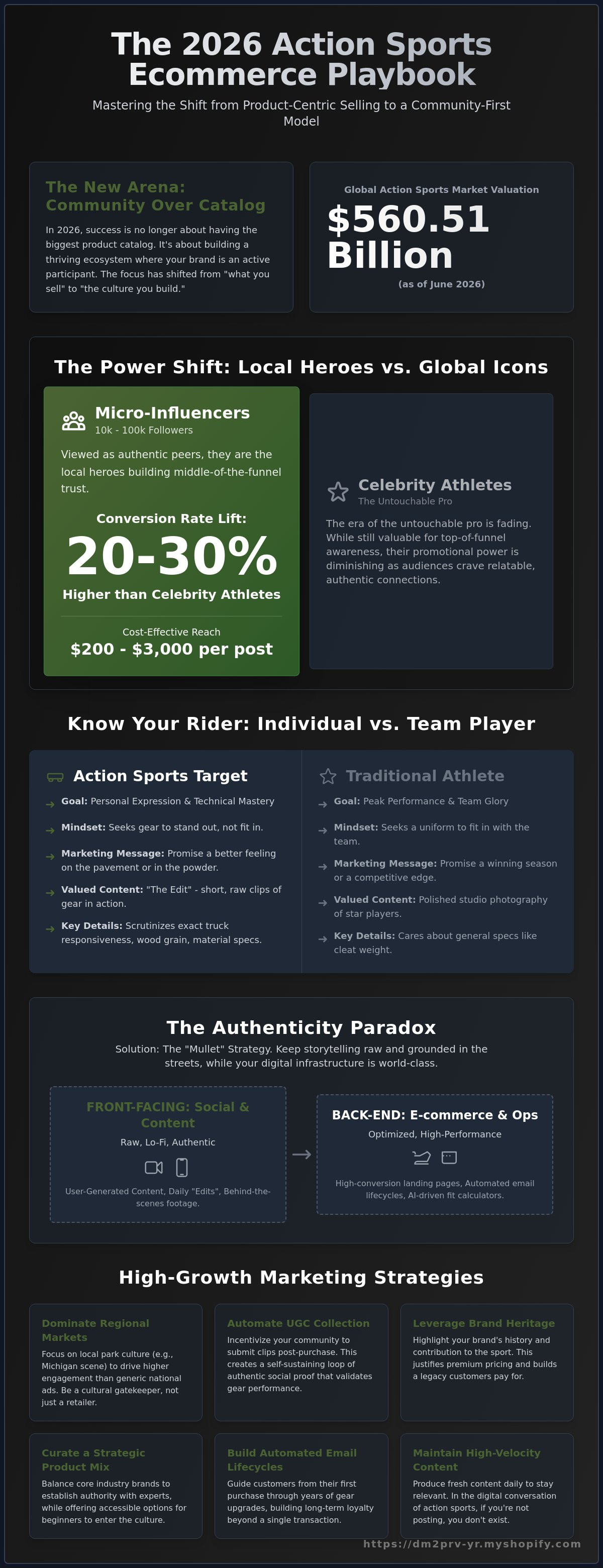
Action sports ecommerce marketing focuses on individualistic, high-energy activities like skateboarding, surfing, and snowboarding. Unlike traditional sports that emphasize team dynamics and uniformity, these categories revolve around personal expression and technical mastery. As of June 2026, the global action sports market has reached a valuation of $560.51 billion. To capture a share of this massive industry, successful brands have shifted from "product-first" catalogs to "community-first" ecosystems. Understanding The State of Action Sports Ecommerce Marketing in 2026 requires a deep dive into how digital culture influences purchasing decisions.
The psychology of a skater or snowboarder is fundamentally different from a traditional athlete. They aren't looking for a uniform to fit in; they're looking for gear that helps them stand out. This requires a high-velocity content strategy where your brand isn't just a retailer but a constant participant in the digital conversation. If you aren't producing fresh content daily, you don't exist in the eyes of your core audience.
Action Sports vs. Traditional Sporting Goods
Traditional sporting goods marketing often targets "the athlete" through messages of peak performance and team glory. In contrast, action sports marketing targets "the individual." Your ad copy shouldn't promise a winning season. It should promise a better feeling on the pavement or in the powder. This shift changes everything from your photography to your technical descriptions. In 2026, customers demand "The Edit." Short, raw video clips of gear in use drive more sales than polished studio photography. While a soccer player might care about cleat weight, a skater will scrutinize the exact responsiveness of their trucks or the specific wood grain of their deck. Technical specs aren't just details; they're the foundation of your brand's credibility.
The Rise of Niche Authority in 2026
The days of the "general sporting goods store" are fading. In 2026, successful brands position themselves as specialized hubs and cultural gatekeepers. You don't just sell products; you curate a lifestyle. Research shows that action sports micro-influencers, those with 10,000 to 100,000 followers, drive 20% to 30% higher conversion rates than celebrity athletes. These creators are viewed as more authentic by the community. They typically charge between $200 and $3,000 per post, making them a cost-effective way to build middle-of-the-funnel trust. By focusing on these niche authorities, your brand avoids the "sell-out" label and secures a place in the local scene. This transition from a broad retailer to a specialized authority is the only way to survive the high competition from big-box stores.
Authenticity vs. Performance: The Action Sports Marketing Paradox
Scaling a brand in this niche creates a unique tension. If your marketing feels too corporate, you risk the "sell-out" label and lose your core audience. If it stays too underground, you struggle to reach the volume needed for growth. Successful action sports ecommerce marketing in 2026 solves this by using a "mullet" strategy. The front-facing content on social media stays raw and lo-fi, while the backend Shopify landing pages are optimized for high-velocity conversions. Brands like Vans and Volcom have proved that you can maintain cultural relevance at scale by keeping your storytelling grounded in the streets while your digital infrastructure remains world-class.
Heritage plays a vital role in justifying premium pricing for hardware and streetwear. When a customer buys a high-end deck or technical jacket, they aren't just paying for materials. They're paying for the brand's history and its contribution to the sport's progression. Highlighting this legacy allows you to maintain healthy margins even as big-box retailers attempt to commoditize basic gear. It's about selling the soul of the sport alongside the physical product.
The Role of User-Generated Content (UGC)
A polished studio photoshoot of a skateboard deck is expected, but it rarely converts as well as a grainy smartphone video of a customer landing a trick. User-generated content provides the social proof necessary to validate the durability and performance of technical gear in authentic, high-stakes environments. To scale this, you should implement automated collection tools at the post-purchase stage. Incentivize your community to upload their clips in exchange for loyalty points or early access to limited drops. This creates a self-sustaining loop of authentic marketing material that resonates with both beginners and seasoned pros.
Technical Storytelling for Hardware
Technical gear like skate shoes and hardware often suffers from high return rates when customers don't understand the fit or specs. In 2026, technical storytelling is the solution. Use 3D product visualizations and fit calculators to show the "unseen" features, such as the responsiveness of a truck's bushing or the specific concave of a maple deck. This level of detail educates the beginner without alienating the expert who demands specific performance metrics. By providing this clarity, you reduce buyer hesitation and post-purchase regret. If you want to refine how your store communicates these technical details, you can explore specialized action sports ecommerce solutions that bridge the gap between raw culture and high-performance retail.
High-Growth Marketing Strategies for Shopify Action Sports Stores
Action sports ecommerce marketing requires a departure from the standard retail calendar. While traditional stores focus heavily on the Q4 holiday rush, your brand must capitalize on niche events that resonate with the culture. For example, June 21 is Go Skateboarding Day, a massive opportunity for engagement and sales that big-box retailers often overlook. Successful Shopify stores in 2026 use these specific dates to launch limited gear or community events. Aligning your marketing with the actual rhythm of the sport builds a level of trust that generic seasonal sales cannot match.
Email marketing remains a powerhouse for growth when segmented by the customer's skill level. A beginner purchasing their first complete skateboard needs "how-to" content and maintenance tips. In contrast, a seasoned enthusiast wants to know about the latest technical truck innovations or limited-edition deck collaborations. By tailoring your flows to the skater's lifecycle, you increase relevance and lifetime value. Complement these emails with hyper-segmented SMS alerts for streetwear drops. Because these releases often sell out in minutes, a direct line to your most loyal customers ensures high conversion rates and rewards your core community.
Implementing "Shop the Look" features on your product pages is another way to scale. Instead of just selling a pair of skate shoes, show the full kit, including the socks, chinos, and the specific board setup used in the promotional video. This approach helps customers visualize the complete aesthetic and technical setup, naturally increasing your average order value.
Optimizing for Mobile-First Shoppers
In 2026, the "TikTok-to-Checkout" pipeline is the primary path for Gen Z buyers. Your Shopify store must be optimized for speed and frictionless browsing. High-demand releases for brands like Vans or Dr. Martens require mobile-specific size guides to reduce hesitation. If a customer can't quickly determine their fit on a five-inch screen, they'll bounce. Implementing one-click checkout options like Shop Pay or Apple Pay is essential for capturing impulse buys during high-velocity streetwear drops where every second counts.
Retention Strategies: Building the 'Local' Digital Hub
Retention in the action sports world is about becoming a digital version of the local shop. Your loyalty program should reward more than just spending; give points for uploading trick clips or participating in community forums. Consider subscription models for high-wear consumables. Items like wheels, grip tape, and skate wax have predictable lifespans. By using automated "re-up" reminders based on average product life, you solve a problem for the customer before they even realize they need new gear. This proactive approach keeps your brand at the center of their skating or riding experience.
Local Michigan Marketing: Dominating the Regional Scene
Winning at action sports ecommerce marketing doesn't always require a massive national budget. Often, the most profitable brands are those that dominate their home turf first. For a Michigan-based store, this means shifting focus from generic national campaigns to hyper-local strategies in Detroit, Grand Rapids, and Flint. National retailers might have bigger budgets, but they can't match the "Home Turf" advantage of local delivery speed. In 2026, offering same-day or next-day shipping within the Great Lakes region is a powerful USP that converts local shoppers who are tired of waiting for shipments from the coast.
Michigan-specific SEO is your secret weapon for capturing high-intent traffic. Instead of fighting for broad terms, target localized keywords like "skate shops in Brighton" or "Fenton snowboard gear." This approach allows you to rank higher with less effort while reaching customers who are ready to buy. Additionally, with Michigan's flat 6% state sales tax and zero local city taxes as of June 2026, your checkout process remains simple and transparent for regional buyers. Transparency in pricing builds the kind of trust that long-term community brands are built on.
Community Building in Detroit and Grand Rapids
Detroit and Grand Rapids boast some of the most vibrant skate and snow scenes in the Midwest. You can tap into this energy by sponsoring local "Best Trick" contests at regional parks. These events are goldmines for high-quality social content that feels far more authentic than a studio shoot. Consider partnering with Michigan-based artists to create exclusive regional deck designs or apparel. A "Michigan Skate Guide" on your blog, featuring the best spots from the Wig in Detroit to the parks in Grand Rapids, drives organic local traffic and positions your brand as a community leader rather than just a faceless shop.
Geo-Targeted Digital Ads for the Great Lakes Region
Digital advertising is most effective when it's relevant to the user's physical location. Set up radius-based ads specifically around popular skate spots in Fenton and Brighton. Use local landmarks in your ad creative to catch the eye and increase click-through rates. When a skater sees an ad featuring a spot they recognize, the connection is immediate. Combine this with messaging that highlights "Fast Michigan Shipping" to directly compete with national giants. If you're ready to start building your regional presence, you can browse our Michigan-focused action sports marketing tools to get started today.
Scaling Your Action Sports Brand with Authentic Gear
Scaling your brand requires a foundation of inventory that speaks directly to the core audience. In the world of action sports ecommerce marketing, carrying respected names like Independent Trucks and Volcom isn't just a business choice; it's a signal of authenticity. These brands carry decades of cultural weight. When a technical skater sees these logos on your site, they know you understand the sport's history and requirements. This credibility allows you to command higher margins and build a loyal customer base that trusts your technical recommendations.
Your product mix should serve a dual purpose. You must cater to the expert who knows exactly what bushing hardness they need, while remaining accessible to the beginner buying their first setup. This balance is crucial for long-term growth. Experts provide the "cool factor" and technical validation your brand needs to stay relevant. Meanwhile, beginners represent the largest segment of your sales volume. By curating a catalog that includes both high-performance hardware and lifestyle streetwear, you position your store as the ultimate resource for the Michigan action sports community.
Before you increase your ad spend, perform an audit for "authenticity gaps." Look at your current creative and ask if it reflects the raw energy of the sports you represent. If your marketing feels too polished or detached from the actual culture, your conversion rates will suffer regardless of your budget. Bridging these gaps is the first step toward sustainable scaling in 2026.
Curating the Perfect Action Sports Catalog
Stocking iconic brands like Vans and Obey builds immediate store credibility with a broad audience. These brands act as "staples" that drive consistent traffic, while high-performance hardware keeps the core community engaged. It's about creating a destination where a customer can find both a durable pair of shoes and a precision-engineered deck. If you're looking to refine your hardware selection to appeal to serious riders, see our guide to the best skateboard brands for performance to ensure you're offering the right gear for your audience.
Starting Your Growth Journey
Don't try to be everywhere at once. Focus on one key channel, like Instagram or TikTok, and master the high-velocity storytelling required for action sports ecommerce marketing before diversifying. Once you've established a consistent content loop that resonates with your local community, you can begin to scale your paid efforts. The value of expert consultation often lies in identifying which technical specs to highlight and which community events to sponsor. Ready to take the next step in your brand's evolution? Explore our latest skate and streetwear arrivals to fuel your brand's growth and start building your digital legacy today.
Building the Future of Your Action Sports Brand
The landscape of action sports ecommerce marketing has evolved into a space where community and authenticity are the primary drivers of growth. By balancing raw, unscripted content with the technical precision of a high-performance Shopify store, you can build a brand that resonates with both local heroes and technical experts. Whether you're dominating the regional scene in Michigan or scaling to a national audience, the key is to stay rooted in the culture that makes these sports unique.
It's time to audit your current strategy and bridge the gap between your brand's heritage and its digital performance. We provide Michigan-based support and fast shipping to Detroit and Grand Rapids, ensuring your community gets the gear they need without the wait. From core hardware by Independent to iconic apparel from Volcom and Vans, we help you curate a catalog that demands respect. Take the next step in your brand's journey today and lead the way in 2026.
Shop the latest in Action Sports & Streetwear
Frequently Asked Questions
What is the best social media platform for action sports marketing in 2026?
TikTok is the top platform for discovery, while Instagram remains the standard for community engagement. TikTok's algorithm allows smaller brands to reach massive audiences through raw, high-velocity clips. Successful brands use these platforms to fuel a direct "TikTok-to-Checkout" pipeline. This strategy prioritizes immediate engagement over polished production, allowing you to capture the attention of Gen Z shoppers who value authenticity over corporate messaging.
How do I market technical skate hardware to beginners?
You market technical gear to beginners by translating complex specs into tangible benefits. Instead of just listing wood types, explain how a specific maple ply provides better "pop" or durability for someone learning their first tricks. Using 3D visualizations and simplified fit guides helps newcomers feel confident in their purchase. This approach builds trust from the first sale, turning a novice into a lifelong enthusiast who understands the value of quality hardware.
Is influencer marketing still effective for skate brands?
Influencer marketing is more effective than ever, but the focus has shifted to micro-influencers with 10,000 to 100,000 followers. These creators drive 20% to 30% higher conversion rates on promotional links compared to celebrity athletes. They're perceived as more trustworthy figures within niche communities. By partnering with local heroes rather than distant superstars, your brand maintains its "core" status while benefiting from targeted, high-intent traffic.
How can a local Michigan shop compete with national ecommerce giants?
A local shop competes by leveraging regional shipping speeds and community ties. While national giants offer broad selections, they can't match the same-day or next-day delivery to cities like Detroit and Grand Rapids. Highlighting your Michigan roots in your action sports ecommerce marketing creates a "Home Turf" advantage. Local buyers often prefer supporting shops that sponsor their local parks and understand the specific needs of the regional skate and snow scene.
What are the most important SEO keywords for action sports?
The most important keywords are a blend of broad category terms and hyper-local identifiers. You should target high-intent phrases like "skate shops in Brighton" or "Fenton snowboard gear" to capture regional traffic. Additionally, focusing on technical terms such as "responsive skateboard trucks" or "impact-resistant skate shoes" helps you rank for specific hardware needs. A strong focus on action sports ecommerce marketing as a strategic term ensures you're visible to both local shoppers and technical experts.
How do I reduce return rates for skate shoes and apparel?
Reducing return rates requires the implementation of AI-powered sizing tools and detailed technical storytelling. Smart sizing calculators help customers find the right fit for technical gear like skate shoes, which often vary across brands. Providing clear, accessible information about materials and fit reduces buyer hesitation. While new regulations in Europe now require a "cancellation button," adopting high transparency standards globally helps prevent the dissatisfaction that leads to returns in the first place.
What kind of video content drives the most sales for action sports?
Raw, lo-fi video content—often called "The Edit"—is the primary sales driver in 2026. These clips show the gear in actual use, proving its durability and performance in real-world environments. Short-form vertical videos that highlight technical tricks or "day in the life" sequences feel more authentic than studio-produced commercials. This type of content resonates with the community's desire for unscripted, genuine recommendations from people who actually ride the equipment.
How do I balance 'core' skate culture with commercial growth?
Balancing culture and growth requires a "mullet" strategy: keep your front-end content raw and underground while your back-end operations are highly optimized. Your social media should focus on the lifestyle and community, while your Shopify store handles the technical performance and conversion. This allows you to scale your business without losing the "street cred" that defines your brand. Authenticity isn't about staying small; it's about staying true to the sport's roots as you grow.
Disclaimer
Some content published on this website may be developed with the assistance of AI-powered research and writing tools to help streamline research, organization, and content creation. All articles are reviewed, edited, and approved by Marvin Growth Partners to ensure they align with our perspectives, experience, and intended messaging.
While we strive to provide accurate and up-to-date information, blog content is intended for informational and educational purposes only and should not be considered legal, financial, or professional advice. Readers should independently verify information and consult qualified professionals when appropriate.