

DTC Marketing for Sporting Goods Brands: The 2026 Growth Playbook
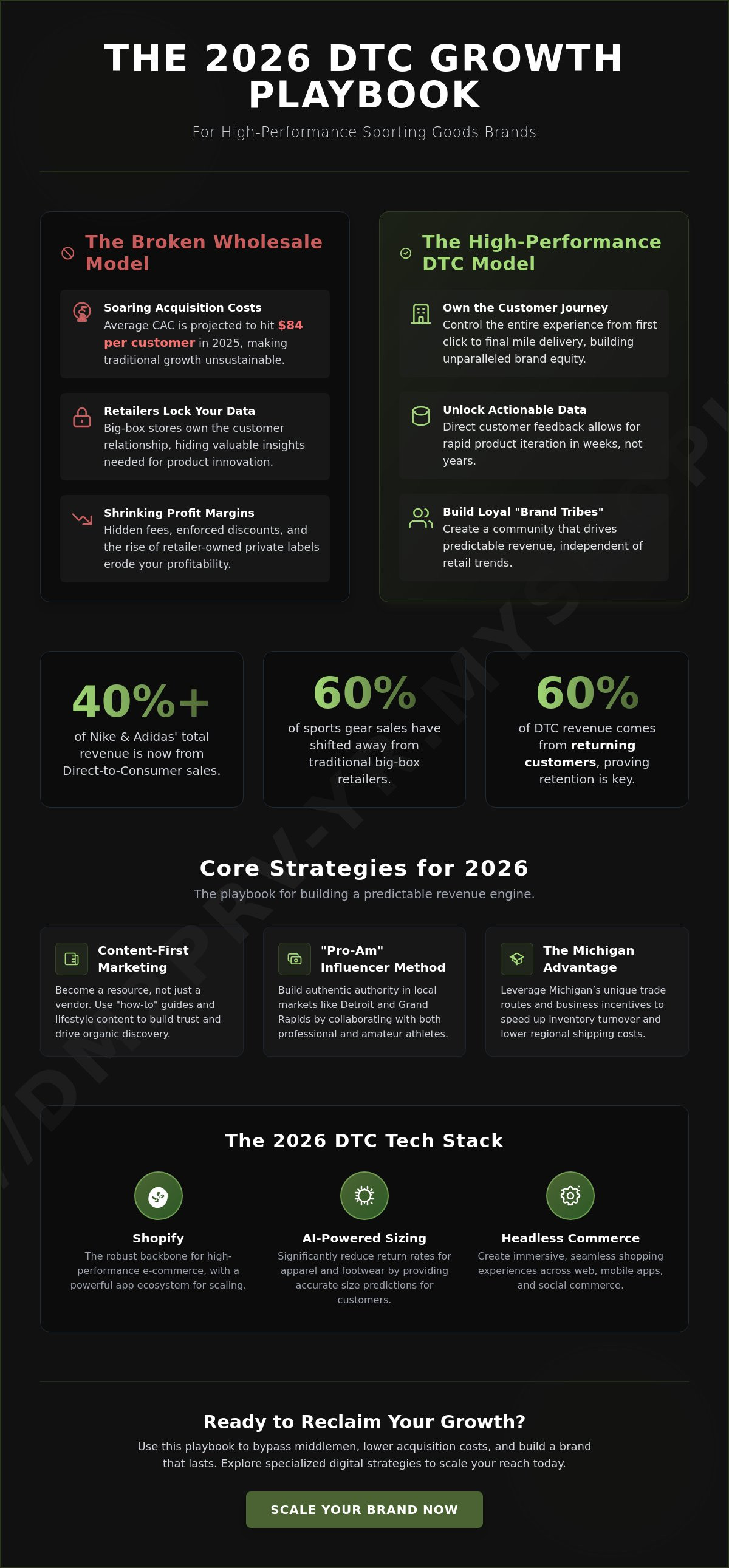
With average e-commerce customer acquisition costs soaring to $84 per person in 2025, the traditional path to growth for sports gear has hit a wall. You've likely seen your wholesale margins shrink while big-box retailers keep your most valuable customer data under lock and key. It's a frustrating position, but industry leaders like Nike and Adidas are already proving that a direct approach works, with DTC sales now accounting for over 40% of their total revenue. Mastering DTC marketing for sporting goods brands is no longer just an option; it's the only way to ensure your brand's survival and long-term profitability.
This guide provides the 2026 growth playbook you need to bypass middlemen and build a dominant, data-driven business. You'll learn how to lower your acquisition costs by leveraging regional logistics hubs and hyper-local community clusters. We'll also cover essential compliance updates for the 2026 privacy acts in Indiana and Rhode Island, while showing you how to turn Michigan's unique business incentives into a lasting competitive advantage. From AI-powered personalization to the rise of women's sports, we'll outline the exact steps to build a predictable revenue engine through your own channels.
Key Takeaways
- Learn how to reclaim shrinking wholesale margins by transitioning to a high-performance model for DTC marketing for sporting goods brands.
- Discover how to use content-first strategies and the "Pro-Am" influencer method to build authentic authority in local markets like Detroit and Grand Rapids.
- Uncover the logistics advantages of Michigan’s trade routes to speed up inventory turnover and lower your regional shipping costs.
- Explore the Skateboard Lifestyle Framework to build dedicated "Brand Tribes" that drive predictable revenue through private community groups.
- Access a practical implementation checklist to identify profit leaks and select the ideal hero product for your initial direct-to-consumer push.
The Evolution of DTC Marketing for Sporting Goods Brands
Ownership defines the modern sporting goods landscape. In 2026, the most resilient brands have moved beyond simply manufacturing gear; they now control the entire journey from the production line to the final mile of delivery. This shift has been dramatic. Recent data indicates that 60% of sports gear sales have moved away from traditional big-box retailers as brands reclaim their independence. This evolution is driven by the Direct-to-consumer (DTC) business model, which prioritizes the relationship over the transaction. When you own the customer feedback loop, you aren't just making a sale. You're gaining insights that allow you to iterate on product design in weeks rather than years.
Successful DTC marketing for sporting goods brands requires a fundamental mindset shift. You're no longer just a product company fighting for shelf space. Instead, you're becoming a media and community company that happens to sell high-quality equipment. This approach builds "Brand Tribes" that stay loyal regardless of what's trending on a retailer's end-cap. By controlling the narrative and the data, you build a predictable revenue engine that wholesale partners simply can't match.
Why Wholesale is No Longer the Gold Standard
For decades, getting a product into a national sporting goods chain was the ultimate goal. Today, that model is leaking profit at every stage. Hidden costs like shelf-space fees and retailer-enforced seasonal discounts eat into your margins before the product even leaves the store. Perhaps more dangerous is the rise of retailer-owned "Private Label" brands. Big-box stores use your sales data to create cheaper, in-house versions of your best-selling items, effectively cannibalizing your market share. When you're just another SKU on a crowded wall, your brand equity disappears. Customers remember the store where they bought the gear, not the brand that actually made it.
The 2026 DTC Tech Stack
Modern DTC marketing for sporting goods brands relies on a sophisticated digital infrastructure. Shopify remains the backbone for high-performance brands, particularly in the skate and outdoor sectors, due to its robust app ecosystem and reliability. In 2026, the focus has shifted toward integrating AI for size-prediction, which significantly reduces return rates for apparel and footwear. Headless commerce has also become a standard for premium brands. This technology separates the front-end experience from the back-end logic, allowing you to create immersive digital brand worlds that offer seamless shopping across mobile apps, social commerce, and web browsers.
Core Strategies for High-Performance DTC Marketing
Effective DTC marketing for sporting goods brands requires a pivot from aggressive customer acquisition to high-value retention. With e-commerce customer acquisition costs rising by up to 60% since 2023, brands can't afford to treat every visitor like a stranger. Instead, the focus must shift toward content-first marketing. By producing "how-to" guides and lifestyle content, you position your brand as a resource rather than a vendor. This approach drives organic discovery while building the trust necessary for a high-ticket equipment purchase.
Retention is the engine of profitability in 2026. Data shows that 60% of DTC brand revenue now comes from returning customers. Channels like email and SMS offer the highest ROI because they allow you to speak directly to athletes who already trust your gear. You can use dynamic personalization to tailor your digital storefront based on a user’s specific sport or skill level. If a customer recently bought a beginner board, your site should automatically surface maintenance tips or mid-tier upgrades rather than entry-level kits. For those looking to buy skateboard online, this level of technical relevance often makes the difference between a one-time buyer and a lifelong advocate.
Winning the Organic Search Game
Search engine optimization acts as a low-cost customer acquisition engine for niche sports by capturing high-intent traffic at the exact moment an athlete seeks a technical solution or gear upgrade. High-performing brands create deep-dive resource pillars that cover hardware maintenance and performance tips. These articles don't just sell; they educate. By ranking for high-intent keywords, you bypass the expensive bidding wars of social media ads. If you're ready to scale your reach, exploring specialized digital strategies can help you identify which keywords your competitors are overlooking.
The 'Pro-Am' Strategy and Social Commerce
Authority is built locally. The "Pro-Am" strategy involves partnering with respected local influencers in cities like Detroit and Grand Rapids to build authentic community ties. These aren't just celebrities with millions of followers. They're the skaters in Fenton or the athletes in Brighton who set the tone for their local scenes. Short-form video content featuring these creators, such as trick tutorials or workout routines, generates high engagement and provides authentic User-Generated Content (UGC). Live-stream shopping events for limited edition gear drops further capitalize on this excitement, turning a standard product launch into a must-watch community event.
The Michigan Advantage: Logistics and Regional DTC Scaling
Digital strategies often focus on pixel tracking and ad spend, but the physical infrastructure of your business determines your ultimate profitability. Michigan is rapidly becoming a "Silicon Valley for Sporting Goods" logistics. This transformation isn't accidental. The state's geography allows brands to leverage Detroit's proximity to international trade routes, facilitating faster inventory turnover. Faster turnover means less capital stays tied up in sitting stock. By establishing a base here, you can validate your brand in a diverse, sports-heavy market before attempting a costly national expansion.
Implementing effective DTC marketing for sporting goods brands requires a supply chain that keeps up with modern consumer expectations. In 2026, 60% of all e-commerce purchases happen on mobile devices, often while consumers are on the move. These shoppers prioritize speed above almost everything else. Utilizing local hubs in Grand Rapids and Flint allows you to achieve one-day shipping across the entire Midwest. This regional dominance creates a competitive moat that global companies struggling with coastal port congestion simply can't cross.
Detroit and Flint as Fulfillment Powerhouses
Centralized Michigan warehousing drastically reduces shipping costs to both the East and West coasts compared to being located on either edge of the country. You should partner with local third-party logistics (3PL) providers who specialize in bulky items like bikes, weights, or hockey gear. These partners understand the specific handling requirements that generic fulfillment centers often overlook. In 2026, shipping speed remains a primary driver of conversion rates. A delay of even two days can lead to a significant increase in cart abandonment, making Michigan's central location a vital asset for your bottom line.
Hyper-Local Marketing in Michigan
Success starts at home. Sponsoring local events in Brighton and Fenton allows you to drive high-intent digital traffic through authentic, face-to-face interactions. You can use geo-targeted ads to promote "click-and-collect" options for local customers, which eliminates shipping costs entirely for those nearby. Building a "Michigan Made" brand identity fosters a level of regional loyalty that national retailers can't replicate. This approach transforms your brand from a faceless entity into a local success story that your community feels proud to support.
- Strategic Proximity: Reach the majority of the U.S. population within two days via ground shipping.
- Reduced Overheads: Benefit from Michigan's business development programs and competitive warehouse rates.
- Community Trust: Leverage regional pride to lower your initial customer acquisition costs.
Community-Led Growth: The Skateboard Lifestyle Framework
Community is the heartbeat of niche sports. Unlike generic fitness gear, skateboarding and similar activities are rooted in a specific culture that values authenticity over mass-market appeal. This creates a built-in advantage for DTC marketing for sporting goods brands because the audience already seeks connection. By adopting the skateboard lifestyle framework, brands move from being a vendor to a community leader. You aren't just selling a deck or a pair of pads; you're facilitating a way of life that resonates with your customers' identities.
Successful brands in 2026 are building "Brand Tribes" through private Discord servers and exclusive community groups. These spaces allow for a "Feedback-to-Factory" pipeline where you use real-time community polls to design your next product line. This direct line of communication minimizes the risk of producing inventory that doesn't sell. Some brands are even shifting toward "gear-as-a-service" subscription models to ensure predictable revenue. If you implement this, ensure you follow the Restore Online Shoppers' Confidence Act (ROSCA). Federal law now requires clear disclosure of auto-renewing terms and a simple, one-click cancellation process to maintain consumer trust.
Defining Your Brand's Subculture
To win, you must identify the core values of your audience, such as durability, technical performance, or street-level credibility. Avoid corporate-speak at all costs. Authentic sports communities can smell a generic marketing pitch immediately. Local skate shops across Michigan have successfully used DTC platforms to preserve their local culture while scaling their revenue globally. They don't just post product ads; they share stories and celebrate local talent. If you want to build this kind of deep connection with your audience, working with a specialized growth partner can help you find and amplify your brand's unique voice.
Events and Physical Touchpoints
Physical presence lowers your digital Customer Acquisition Cost (CAC) by creating a tangible "billboard" for your digital brand. Pop-up shops in Detroit or community events in Grand Rapids bridge the gap between the screen and the street. Since 60% of all e-commerce purchases now happen on mobile devices, integrating QR codes at local parks or trailheads is a highly effective strategy. An athlete can scan a code on a piece of equipment and have a replacement or upgrade ordered before they even head home. This seamless integration of physical activity and digital sales is the hallmark of modern DTC marketing for sporting goods brands.
- Community Polls: Let your customers vote on colorways or technical features to guarantee day-one demand.
- Hyper-Local Events: Use Michigan-based meetups to create high-quality social content and lower your ad spend.
- Subscription Transparency: Comply with ROSCA by making the value of your gear-as-a-service model clear and easy to manage.
Scaling Your Sporting Goods Brand: Implementation Checklist
Scaling a brand isn't about doing everything at once; it's about executing a sequence of high-impact moves. Before you increase your ad spend, you must audit your current wholesale margins to identify exactly where profit is leaking. Retailer-enforced discounts and shelf-space fees often hide the true cost of third-party distribution. Once you've identified these gaps, select a single "Hero Product" to lead your direct-to-consumer push. This product should represent your brand's core identity and offer the highest margin. It's much easier to build a profitable engine around one high-demand item than an entire catalog of 50 SKUs.
Successful DTC marketing for sporting goods brands requires a physical foundation as strong as your digital one. You've already learned about the Michigan advantage; now you must operationalize it. This means establishing a fulfillment strategy in a hub like Flint or Grand Rapids to ensure you can meet the 1-day shipping expectations of Midwest customers. By leveraging Michigan's business development programs, such as those offered by the MEDC, you can offset the initial costs of setting up this regional infrastructure. A localized strategy allows you to compete with national giants while maintaining the agility of a niche player.
Phase 1: The Digital Foundation
Your digital storefront must be built for performance, not just aesthetics. In 2026, 60% of all e-commerce purchases happen on mobile devices, meaning your site's speed is a direct driver of revenue. A mobile storefront that takes longer than 2 seconds to load will lose the attention of an athlete looking for a quick gear replacement. Beyond speed, ensure your analytics are configured to track Customer Lifetime Value (LTV) rather than just the first sale. This data is essential for DTC marketing for sporting goods brands, as it allows you to justify higher acquisition costs for customers who will return for years.
Phase 2: Growth and Retention
Once your foundation is solid, shift your focus to sustainable growth. Stop measuring success solely by Return on Ad Spend (ROAS) and start looking at your Contribution Margin. With average customer acquisition costs sitting between $68 and $84, you need to know exactly how much profit remains after ad spend and shipping are paid. Implement a loyalty program that rewards community participation—like posting a trick video or attending a local meet-up—rather than just purchases. This builds brand equity and lowers your long-term CAC. Finally, refine your logistics to match Amazon-level expectations, ensuring that your community-led growth is backed by a flawless delivery experience.
Own Your Brand's Future in the Direct Era
The transition to a direct model is a permanent structural shift in how athletes engage with their gear. By reclaiming customer data and utilizing strategic regional shipping hubs, you eliminate the friction and fees of traditional retail. You've seen how a community-led framework transforms a standard product into a cultural staple. This playbook offers the necessary foundation, but your brand's ultimate success depends on moving from theory to execution.
Mastering DTC marketing for sporting goods brands requires balancing digital innovation with physical reliability. Whether you're refining your mobile user experience or fostering a "Brand Tribe," the focus must remain on building long-term equity through owned channels. Our expertise in Michigan-based logistics and community-led growth for skate and street brands provides a proven Shopify framework built for the 2026 landscape.
The tools to bypass big-box limitations are ready for you. Scale your brand with a high-performance DTC strategy today and take full control of your growth trajectory. The next era of the sporting goods industry belongs to those who build direct connections. It's time to start building yours.
Frequently Asked Questions
What is the most effective marketing channel for sporting goods in 2026?
Short-form video combined with integrated social commerce is the most effective channel in 2026. Platforms like Instagram and TikTok now serve as direct points of purchase, reducing the friction between discovery and checkout. Successful brands use these channels to showcase technical gear in action, allowing athletes to see performance before they buy. This visual proof drives higher conversion rates than traditional static display ads or long-form blog content.
How much should a sporting goods brand spend on DTC customer acquisition?
Your spending should be guided by your contribution margin rather than a fixed percentage. In 2026, average e-commerce customer acquisition costs have reached between $68 and $84 per customer. This represents a 40% to 60% increase from 2023 levels. To remain profitable, focus on high-LTV customers and use DTC marketing for sporting goods brands to drive repeat purchases, as 60% of revenue now comes from returning buyers.
Can I sell DTC if I already have wholesale agreements with big retailers?
You can absolutely maintain a DTC channel alongside wholesale agreements. Industry leaders like Nike and Adidas have already proven this model, with DTC sales accounting for 42% and 40% of their total revenue respectively in 2025 and 2026. The key is offering exclusive "DTC-only" colorways or early-access drops. This strategy protects your retail partnerships while allowing you to own the most valuable customer data and build direct loyalty.
What are the biggest challenges for sports brands moving to a DTC model?
The biggest hurdles involve rising acquisition costs and complex data privacy regulations. With CAC increasing by up to 60% in recent years, brands must find more efficient ways to reach athletes. Additionally, new 2026 laws like the Indiana Consumer Data Protection Act and updated CCPA regulations require strict handling of sensitive personal information. Managing these legal obligations while scaling a profitable digital storefront requires a robust technical foundation and clear data policies.
How do I manage shipping for bulky sporting goods like skateboards or bikes?
Managing bulky items requires a strategic fulfillment network that reduces the number of shipping zones crossed. Utilizing Michigan-based logistics hubs allows you to reach the majority of the U.S. population within two days via ground shipping. This approach lowers costs compared to shipping from a single coastal warehouse. Partnering with 3PL providers who specialize in oversized sporting equipment ensures your products are handled correctly and delivered without damage.
Is Shopify the best platform for a high-volume sporting goods store?
Shopify remains the top choice for high-volume sports stores because of its mobile-first architecture and reliable SaaS infrastructure. With 60% of all e-commerce purchases now happening on mobile devices, having a fast, responsive checkout is non-negotiable. The platform's monthly fees, typically ranging from $80 to $730, provide a predictable cost structure. This allows you to focus your budget on DTC marketing for sporting goods brands rather than expensive custom server maintenance.
How do I use local Michigan influencers to grow my national brand?
Local Michigan influencers provide the authentic "street cred" that national audiences crave. By partnering with athletes in hubs like Detroit or Grand Rapids, you create content that feels grounded and real. Use these "Pro-Am" creators to demonstrate gear in local parks or gyms. This hyper-local content often performs better in social algorithms, allowing your brand to build a national reputation for authenticity while supporting the local scenes that drive sports culture.
What is a good return rate for DTC athletic apparel and gear?
While apparel return rates can be high, high-performance brands aim to keep them below 20% by using technical solutions. Implementing AI-powered size-prediction tools and detailed video reviews helps customers make more informed decisions. These technologies are becoming essential for reducing the logistical burden of returns. Providing clear, technical specifications for hardware like skateboards or bikes also ensures that customers receive exactly what they need for their specific skill level.
Disclaimer
Some content published on this website may be developed with the assistance of AI-powered research and writing tools to help streamline research, organization, and content creation. All articles are reviewed, edited, and approved by Marvin Growth Partners to ensure they align with our perspectives, experience, and intended messaging.
While we strive to provide accurate and up-to-date information, blog content is intended for informational and educational purposes only and should not be considered legal, financial, or professional advice. Readers should independently verify information and consult qualified professionals when appropriate.