

Ecommerce Brand Strategy for Sports Retailers in Detroit: The 2026 Playbook
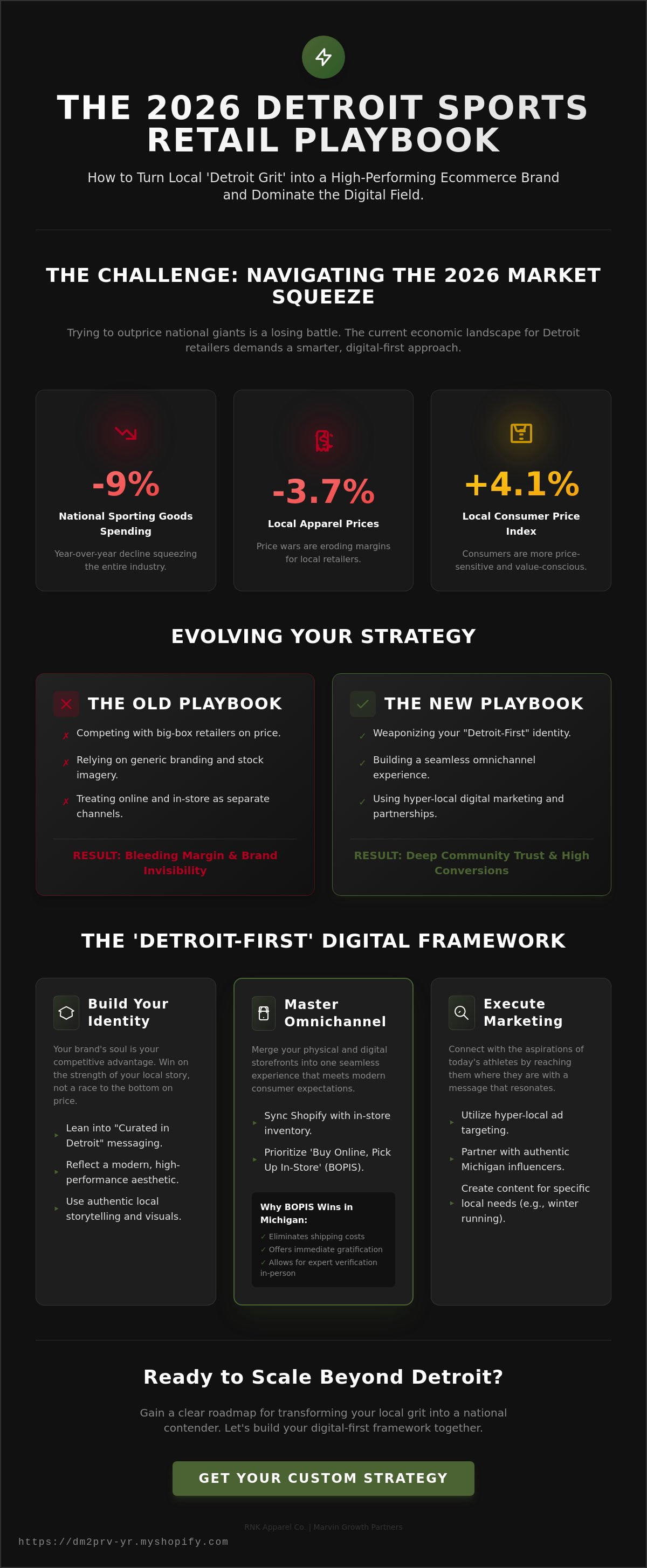
In 2026, trying to outprice national big-box retailers is a guaranteed way to bleed margin while your brand remains invisible. With national sporting goods spending down by 9% year-over-year and local apparel prices dropping by 3.7%, you've likely felt the squeeze of a tightening market. You know your "Detroit grit" is your greatest asset, yet translating that raw energy into a high-performing ecommerce brand strategy for sports retailers Detroit often feels like losing the home-field advantage. It's exhausting to manage omnichannel logistics when you'd rather be focused on the athletes in your community.
You don't need to match a corporate giant's budget to win. Marvin Growth Partners is here to show you how to master a digital-first framework that turns your local Michigan identity into a conversion machine. This playbook provides a clear plan for merging your in-store experience with a seamless Shopify presence, ensuring your brand resonates with every athlete from Woodward Avenue to the digital suburbs. We'll explore how to weaponize your heritage and build a strategy that scales despite the 4.1% increase in the local Consumer Price Index.
Key Takeaways
- Learn how to adapt to the 2026 digital landscape by mirroring the high-tech retail innovations found at landmarks like Ford Field.
- Discover the core pillars of a "Detroit-First" identity that uses local community stories to build deep trust with Michigan athletes.
- Implement a seamless omnichannel framework that synchronizes Shopify inventory with your physical storefronts to eliminate logistical confusion.
- Master a high-performance ecommerce brand strategy for sports retailers Detroit by utilizing hyper-local ad targeting and authentic Michigan influencer partnerships.
- Gain a clear roadmap for scaling your operations from a local hero to a national contender while maintaining your brand’s authentic grit.
The 2026 Detroit Sports Retail Landscape: Why Digital-First is Non-Negotiable
The Michigan sports retail environment has reached a tipping point in May 2026. Athletes in Detroit don't just browse on their phones; they live on them. This shift toward mobile-first consumption means a comprehensive ecommerce brand strategy for sports retailers Detroit is the only way to remain relevant. Since the Detroit-Warren-Dearborn Consumer Price Index rose by 4.1% over the last year, consumers are hyper-aware of value. They're looking for brands that offer more than just a product; they want a seamless digital extension of the local community.
Retail innovations at Ford Field have set a high bar for every local shop. When fans experience instant mobile checkout and high-speed retail tech at a Lions game, they expect that same efficiency from their local running store. This has led to a significant surge in 'Buy Online, Pick Up In-Store' (BOPIS) trends in Flint and Grand Rapids. Local retailers are winning by focusing on three key factors:
- Eliminating Shipping Costs: With discretionary spending tightening, saving on freight is a major draw for Michigan shoppers.
- Immediate Gratification: Athletes want their gear for tonight's workout, not next Tuesday.
- Expert Verification: Shoppers value the chance to confirm fit or performance features with a local expert at the counter.
Evolving Consumer Expectations in Michigan
Modern shoppers in the Great Lakes State have moved past transactional relationships. They demand experience-based interactions that feel personal and immediate. Utilizing sophisticated digital branding allows smaller retailers to compete with national giants by telling a story the big boxes can't replicate. In 2026, technology has flattened the playing field. A shop in Midtown can now offer the same hyper-local delivery speeds and personalized recommendations as a global brand, provided their digital infrastructure is sound. High-performance gear has become a staple for the Detroit fitness community, and they expect their digital shopping experience to be just as high-octane as their training sessions.
The 'Detroit Grit' Factor in Modern Retail
Authenticity is the primary currency for athletes in Brighton and Fenton. However, the "Detroit Grit" aesthetic has moved beyond rusty gears and industrial cliches. The 2026 look is polished, technical, and performance-driven. Your ecommerce brand strategy for sports retailers Detroit must reflect this modern identity to build real trust. It's about showing you understand the specific needs of a Michigan runner facing a 15-degree morning or a local ballplayer training in 90% humidity. By moving away from "Old Detroit" tropes and toward a high-performance identity, you connect with the aspirations of today's athletes while staying rooted in the local culture that defines the region.
Building Your 'Detroit-First' Brand Identity
A winning ecommerce brand strategy for sports retailers Detroit starts with a soul that corporate giants can't buy. While big-box stores rely on massive volume, independent retailers in Michigan win on identity. In a city defined by its resilience and comeback story, your brand must reflect those same values. Whether you're operating out of Corktown or the East Side, your digital presence should feel as local as a Coney Island. This connection is vital because national retailers are currently struggling with a 3.7% decrease in apparel prices. You can't win a race to the bottom on price, so you must win on the strength of your story.
Successful brands in 2026 lean heavily into "Curated in Detroit" messaging. This isn't just about where you ship your packages; it's about the unique perspective you bring to the gear you sell. If you're ready to start selling online, your first step is defining these core pillars. You need to maintain a consistent voice across every touchpoint. If your Instagram sounds like a local coach but your website feels like a generic corporate template, you'll lose the trust of Michigan athletes. Authenticity is your primary currency.
Visual Language and Storytelling
Detroit's industrial heritage offers a unique palette for modern web design. Think raw textures, bold typography, and a "work-hard" aesthetic that resonates with local athletes. Don't use stock photos of generic gyms from other states. Instead, use high-performance photography featuring local Michigan athletes at Belle Isle or the Dequindre Cut. This visual narrative should connect your products to broader cultural movements, such as the skateboard lifestyle that has seen a resurgence in urban Michigan centers. When your customers see familiar landmarks in your digital storefront, they know you're part of the same community.
Community-Centric Branding
Community branding in 2026 means active participation in the local scene. You should partner with youth sports clubs in Flint or running groups in Grand Rapids to provide real-world social proof. Consider creating exclusive "Detroit-only" digital product drops to reward your most loyal local followers. This strategy builds a brand that feels like a local institution rather than just another tab in a browser. By focusing on these deep roots, you create a loyal customer base that isn't swayed by a competitor's minor price cut. If you want to see how a high-performance site looks in action, you can explore local Shopify solutions tailored specifically for Michigan sports retail.
The Omnichannel Blueprint: How to Execute in 2026
Building a powerful ecommerce brand strategy for sports retailers Detroit requires moving past the idea that your physical shop and your website are separate entities. In 2026, they're two sides of the same coin. Your customers expect to see a pair of cleats on your Shopify site and know with 100% certainty that those cleats are sitting on a shelf in Brighton or Fenton. Achieving this level of precision means implementing a technical roadmap that prioritizes data synchronization over guesswork. With Michigan's 6% sales tax applied uniformly across all channels, the only differentiator left is the speed and reliability of your service.
The first step is synchronizing your inventory. If a customer drives from Flint to Detroit only to find an item is out of stock despite the website saying otherwise, you've lost them forever. Implementing a unified customer loyalty program is equally vital. A shopper should earn points for a purchase at your Woodward Avenue location and be able to spend them on your mobile app that same evening. This creates a circular economy within your brand that keeps Michigan athletes coming back. To drive local foot traffic, you must optimize for local SEO by creating location-specific landing pages for every community you serve, ensuring you appear in "near me" searches when it matters most.
Inventory and Logistics Integration
Using Shopify POS is the most effective way to bridge the gap between your web store and your warehouse. Real-time stock visibility is no longer a luxury; it's a requirement, especially for high-intent purchases like buying skateboards online. When managing local pickup in high-traffic Detroit areas, streamline the process with dedicated "click and collect" zones. This reduces friction and allows your staff to focus on upselling rather than hunting for packages in the back room.
Personalization at Scale
Developing a robust omnichannel retail strategy allows you to use purchase history to trigger localized email campaigns. If a customer in Grand Rapids bought running shoes last spring, your AI should trigger a recommendation for waterproof trail gear as the Michigan rainy season approaches. Segmenting your audience by sport and geographic region ensures your marketing feels like a personal conversation. In 2026, the most successful retailers use weather-driven AI to suggest specific products, such as insulated base layers when a sudden Detroit cold snap is forecasted. This level of detail builds a level of trust that national big-box stores simply can't match.
Performance Marketing for the Michigan Sports Market
Stop burning your budget on broad national keywords that pit you against global conglomerates. A successful ecommerce brand strategy for sports retailers Detroit thrives on surgical precision. By focusing your ad spend on hyper-local targeting in Detroit, Flint, and Grand Rapids, you capture high-intent shoppers who actually live where you play. In 2026, performance marketing isn't just about clicks; it's about owning the Michigan market. This means moving beyond generic ads and embracing the current state of influencer marketing, where micro-creators in the local fitness scene hold more sway than distant celebrities.
Gen Z consumers aged 18-24 showed the highest growth in spending per shopper for most of 2025, and this trend has solidified in 2026. To reach them, your strategy must include social commerce platforms like TikTok Shop and Instagram. These aren't just discovery tools anymore; they're digital checkout counters. While high-income shoppers are currently driving growth in premium sports gear, middle-income consumers are being more selective. Your marketing needs to speak to both by highlighting performance value and local relevance through every piece of content you produce.
Local SEO and Google Maps Optimization
Optimizing for "sports store near me" queries across Michigan cities is the most effective way to bridge the gap between digital discovery and physical foot traffic. High-quality local citations and backlinks from Michigan-specific news sites or local sports blogs signal to search engines that you're a regional authority. Detailed local reviews from Detroit customers provide the social proof and keyword density needed to boost your search rankings significantly.
Paid Social and Community Engagement
Your ad creative should feel like home. Use recognizable backgrounds like the Detroit Riverfront or the bricks of Flint to stop the scroll. Geo-fenced campaigns around events like the Detroit Free Press Marathon allow you to serve ads to athletes exactly when they're most engaged with their sport. Don't ignore community hubs like the "Detroit" or "Michigan" subreddits. Building organic brand heat there requires a light touch, but it pays off in long-term loyalty that paid ads can't buy. If you're ready to dominate the local market, start building your high-performance Detroit storefront today.
Future-Proofing Your Strategy: Scaling Beyond Detroit
Scaling a business from a local favorite to a national contender is the ultimate test of your ecommerce brand strategy for sports retailers Detroit. You've already built a foundation on the resilience and grit of the Michigan market. Now, you have to prove that this identity has universal appeal. Expansion shouldn't mean watering down your roots. Instead, it's about exporting the "Detroit-First" mindset to athletes across the country who value performance and authenticity over corporate flash. If your first-party data shows a growing percentage of orders coming from outside the 313 area code, you're ready to test the national waters.
A successful scale-up requires a final 2026 brand audit to ensure your infrastructure can handle the weight of new markets. Before you move, verify these four pillars:
- Data Sovereignty: Ensure you're owning your customer data rather than relying on third-party platform algorithms.
- Logistical Agility: Your inventory must remain synchronized across every new node you add to your network.
- Mobile Performance: Site speeds must be lightning fast to keep bounce rates low in high-competition regions.
- Brand Consistency: Your voice should remain punchy and authoritative, whether the customer is in Flint or Phoenix.
Scaling Without Losing the 'Detroit' Soul
Marketing "Detroit Grit" to customers in other states works because it represents a universal standard of hard work. Don't change your story; just broaden the audience. Use your local success as a case study for national growth. If your gear can survive a Michigan winter or the high-intensity training of a Detroit athlete, it can perform anywhere. As you open new locations or expand your digital reach, standardize the customer experience. Every shopper should feel that same local institution vibe that made you a success on Woodward Avenue.
Technological Readiness for 2027 and Beyond
Future-proofing your ecommerce brand strategy for sports retailers Detroit means investing in headless commerce today. This technology decouples your front-end design from your back-end logistics, allowing for faster mobile speeds and more flexible design updates. You should also prepare for the next wave of AR shopping, where athletes can virtually "try on" footwear or see the scale of equipment in their own space. The retail landscape shifts quickly. Staying agile ensures you aren't just reacting to trends but setting the pace for the entire Michigan sports industry.
Dominate the Michigan Market with a Digital-First Edge
The landscape of 2026 demands more than just a digital storefront. You've learned how to synchronize your inventory across Michigan storefronts and build a brand identity that captures the authentic grit of local athletes. By mastering hyper-local performance marketing and preparing for the next wave of social commerce, you're no longer just a local shop; you're a high-performance retail powerhouse. Implementing a robust ecommerce brand strategy for sports retailers Detroit is the only way to ensure your business thrives while others struggle with tightening margins.
We're here to help you bridge the gap between your physical store and the digital world. With our deep expertise in Michigan retail dynamics and local Detroit support, you can upgrade your sports retail strategy with our 2026 Shopify framework. Our high-performance ecommerce templates are designed specifically to meet the needs of sports brands looking to scale. It's time to turn your local heritage into a national success story. Your community is waiting for a brand that truly understands them, and you have the blueprint to lead the way.
Frequently Asked Questions
What is the most important part of an ecommerce brand strategy for Detroit retailers?
Authenticity and community connection are the most critical elements of a successful ecommerce brand strategy for sports retailers Detroit. You must bridge the gap between high-performance gear and the local culture that defines the region. This involves using local athletes in your imagery and telling stories that resonate with the Detroit comeback spirit. When customers feel a genuine connection to your brand's mission, they prioritize your shop over national competitors.
How do I implement omnichannel retail if I only have one store in Flint?
You don't need multiple locations to master omnichannel retail. Start by syncing your Flint storefront's inventory with your online shop using a unified POS system. This allows you to offer "Buy Online, Pick Up In-Store" (BOPIS), which is a major draw for local shoppers looking to avoid shipping fees. Providing real-time stock visibility for your single location builds trust and ensures your digital presence supports your physical sales.
Is Shopify the best platform for sports retailers in Michigan in 2026?
Shopify remains a top choice for Michigan retailers in 2026 due to its seamless integration between ecommerce and physical point-of-sale systems. Its ability to handle complex inventory and local delivery zones makes it ideal for the specific needs of sports brands. The platform also supports the latest social commerce features, allowing you to reach younger athletes where they spend their time. It's a scalable solution that grows with your business.
How can I use local Detroit culture to improve my conversion rates?
Improving conversion rates requires using visual and verbal cues that signal you're a local authority. Feature recognizable Detroit landmarks in your product photography and use language that mirrors the city's industrious tone. Highlighting "Detroit-First" initiatives or local community partnerships acts as social proof. When a shopper sees their own neighborhood represented in your storefront, the perceived risk of the purchase drops significantly.
What are the biggest mistakes Michigan sports brands make online?
The biggest mistake is trying to mimic national retailers by using generic stock photography and corporate language. This erases your unique competitive advantage as a local specialist. Another common error is failing to synchronize inventory, leading to "out of stock" frustrations for customers who visit your store after seeing an item online. These technical and branding missteps drive loyal local customers toward larger, more reliable platforms.
How much should I invest in local SEO for my Detroit-based shop?
Your investment should scale with your growth, but your primary focus must be on dominating local search queries. Prioritize high-quality local citations and active management of your Google Business Profile. Since localized searches often lead to immediate in-store or online purchases, this is the most cost-effective way to build a sustainable ecommerce brand strategy for sports retailers Detroit. Consistency in your data across all directories is non-negotiable.
Can I compete with Fanatics as an independent sports retailer?
You can definitely compete by offering the specialized expertise and community engagement that massive platforms lack. While they win on volume, you win on curation and personalized service. Focus on niche sports or local high school gear that big-box retailers ignore. By hosting local events and providing expert advice tailored to Michigan's climate and athletic scene, you create a loyal base that values your unique perspective.
What role does local delivery play in a Detroit ecommerce strategy?
Local delivery serves as a powerful tool for competing with the shipping speeds of national giants. By offering same-day or next-day delivery within specific Detroit zip codes, you provide a level of convenience that builds immense customer loyalty. This service is especially valuable for heavy or bulky sports equipment that's expensive to ship via traditional carriers. It turns your physical location into a strategic distribution hub for the metro area.
Disclaimer
Some content published on this website may be developed with the assistance of AI-powered research and writing tools to help streamline research, organization, and content creation. All articles are reviewed, edited, and approved by Marvin Growth Partners to ensure they align with our perspectives, experience, and intended messaging.
While we strive to provide accurate and up-to-date information, blog content is intended for informational and educational purposes only and should not be considered legal, financial, or professional advice. Readers should independently verify information and consult qualified professionals when appropriate.