

How to Lower Customer Acquisition Cost in Ecommerce: A 2026 Strategy Guide
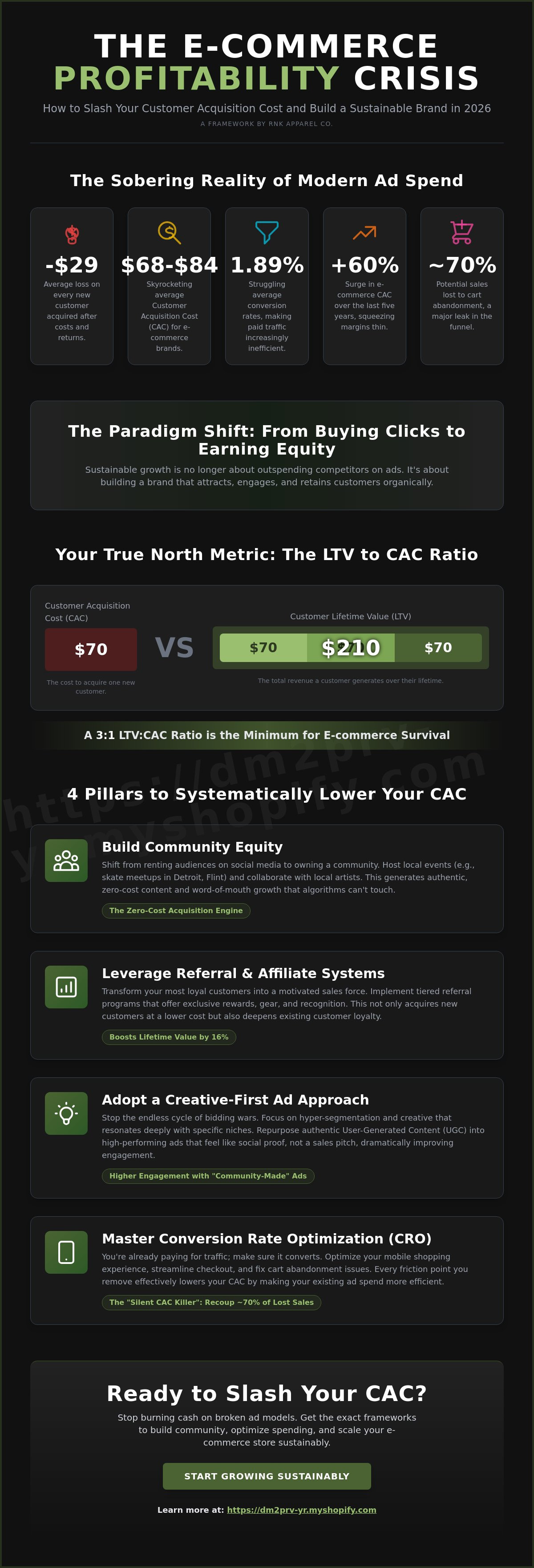
E-commerce brands are currently losing an average of $29 on every new customer they acquire once you account for marketing spend and returns. With the average customer acquisition cost now sitting between $68 and $84, it's no wonder your margins feel like they're disappearing into a black hole of ad spend. You've likely felt the sting of rising social media CPMs and conversion rates that struggle to break past 1.89%. If you're wondering how to lower customer acquisition cost ecommerce strategies can save your bottom line, you're facing the same wall as thousands of other founders. At Marvin Growth Partners, we understand this challenge intimately.
It's exhausting to be at the mercy of platform algorithms that change by the hour. Marvin Growth Partners is here to help you break that dependency. We'll equip you with the exact frameworks to slash your CAC and scale your e-commerce store sustainably by earning community equity rather than just buying clicks. Our guide will walk through diversifying your marketing mix, leveraging referral programs that boost lifetime value by 16%, and using AI-driven optimization to fix a cart abandonment rate that's likely costing you 70% of your potential sales.
Key Takeaways
- Build "community equity" by leveraging local hubs in cities like Detroit and Flint to generate organic content and word-of-mouth growth.
- Master how to lower customer acquisition cost ecommerce strategies by shifting to a creative-first ad approach that uses hyper-segmentation for specific niches.
- Transform your current customers into a motivated sales force by implementing tiered referral programs that offer exclusive rewards and gear.
- Learn why optimizing your mobile shopping experience for users on the move can drastically improve conversion rates and effectively halve your CAC.
What is Customer Acquisition Cost (CAC) and Why is it Rising in 2026?
Financial survival in 2026 starts with a brutal look at your spreadsheets. It's simple math. At its core, What is Customer Acquisition Cost (CAC) is your total marketing spend divided by the number of new customers acquired. But that simple formula hides a painful reality for modern store owners. In the last five years, e-commerce CAC has surged by 60%, with the average cost now hovering between $68 and $84 per customer. E-commerce brands are currently losing an average of $29 on every new customer acquired once marketing costs and returns are factored in. If you're searching for how to lower customer acquisition cost ecommerce, you've likely realized that traditional "pay-to-play" models are broken.
The 2026 reality is shaped by two forces: privacy and automation. Strict privacy laws have blinded traditional pixel-based tracking, making it harder to find your ideal buyer. Meanwhile, AI-driven bidding systems on Meta and Google prioritize high-budget players, often pricing out boutique streetwear and lifestyle brands. Because of this, the first sale is almost always a loss leader. Profitability no longer happens at the checkout; it happens through long-term retention and diversified acquisition.
The Blended CAC Framework
Relying exclusively on "Paid CAC" leads to what we call death by a thousand cuts. If you only measure the cost of your digital ads, you're missing the bigger picture of your brand's health. Blended CAC includes every dollar spent across all channels, including influencers, SEO, and local events, divided by your total customer count. For a Detroit-based shop, this might mean balancing a $1,500 sponsorship for a local skate jam at the Wig with $3,000 in digital ads. The local event drives organic search and direct traffic that doesn't carry a per-click fee, effectively lowering your overall average. Understanding your "allowable CAC" helps you determine exactly how much you can spend to acquire a customer while remaining profitable by their second or third purchase.
The LTV:CAC Ratio: The True North Metric
A 3:1 ratio is the absolute minimum for e-commerce survival. If it costs you $70 to get a customer, they must spend at least $210 with you over their lifetime to cover your overhead and product costs. Strategies for how to lower customer acquisition cost ecommerce often fail because they ignore this back-end revenue. Successful brands now use predictive analytics to spot high-value segments early. For instance, a customer who buys a professional-grade skateboard deck is statistically 4 times more likely to return for wheels and apparel than someone buying a clearance sticker. By identifying these high-LTV segments, you can justify a higher initial acquisition cost because you know the long-term return is mathematically sound.
Building Community Equity: The Zero-Cost Acquisition Engine
Buying attention on social media is a losing game in 2026. Instead of renting an audience from Meta, you need to build community equity. In the skateboarding and streetwear world, this means moving beyond followers and likes. A community isn't just a list of people who might buy your stuff; it's a group that shares your values and identity. When you focus on how to lower customer acquisition cost ecommerce metrics, community-led growth is the most powerful lever you have because it turns your brand into a destination rather than just a vendor.
Local-First Content Strategies
Detroit, Flint, and Grand Rapids aren't just shipping destinations; they are epicenters of culture. By hosting local skate meetups or pop-up shops in these Michigan cities, you create a goldmine of organic social content. These events transform the skateboard lifestyle into a tangible experience that people want to share. Collaborating with Detroit artists for limited-run streetwear drops creates a sense of scarcity and local pride that digital ads can't replicate. This local-to-global strategy builds a foundation of "owned" attention that doesn't disappear when you turn off your ad spend.
UGC Implementation Guide
Trust is the ultimate friction-killer. User-Generated Content (UGC) provides social proof that lowers the barrier to entry for cold traffic. Incentivize your customers to post "first ride" videos or unboxing reels by offering exclusive access to future drops. You can then repurpose these raw, authentic videos into high-performing Meta ads. These "community-made" ads often see much higher engagement because they don't look like ads. By creating a "Community Gallery" on your site, you make your customers the face of the brand, which naturally encourages more people to join the inner circle.
In 2026, crowded inboxes and noisy social feeds make it hard to stay connected. Micro-communities on platforms like Discord or private Telegram groups are becoming the new "owned" channels. These spaces allow for direct, real-time engagement with your most loyal fans. They provide a feedback loop for new product designs and a safe space for your community to connect. If you're looking to scale while keeping costs low, consider exploring our Detroit-inspired collections to see how we weave community identity into every piece. This approach is a core part of how to lower customer acquisition cost ecommerce strategies for brands that want to outlast the competition.
Optimizing Performance Marketing for Maximum Efficiency
Performance marketing isn't just about bidding higher. It's about being smarter. In 2026, the average CPC for e-commerce search ads sits at $1.16, but costs can spike to $3.00 per click if your creative fails to resonate. Mastering how to lower customer acquisition cost ecommerce in this environment requires a "Creative-First" strategy. Modern algorithms favor engagement over raw spend. When your ad stops the scroll, platforms like Meta and Google reward you with better placements and lower costs. You aren't just buying clicks; you're earning them through relevance.
Hyper-segmentation is your next line of defense. Don't treat every skater or streetwear fan the same. A park skater looking for high-impact wheels has different needs than a street skater hunting for durable grip tape. By segmenting your ads based on these specific interests, you increase your click-through rates. Higher relevance scores signal to AI-driven bidding systems that your content is valuable to the user. This helps the algorithm find your "cheapest" high-intent customers within a crowded marketplace, preventing you from wasting budget on broad, uninterested audiences.
The 'Hook-Body-Close' Ad Framework
Your creative needs to work fast. You have exactly 0.5 seconds to stop someone from scrolling past your brand. Use high-energy, local Detroit skate footage as your hook to grab attention immediately. The body of the ad should provide genuine value. Instead of pushing a generic product page, try linking to a pro-grade gear guide. This builds authority and educates the customer before you ask for the sale. This educational approach lowers the "barrier to entry" for new customers, often resulting in a much higher conversion rate than a standard "Buy Now" pitch.
Retargeting and LAL (Lookalike) Optimization
Retargeting is the most efficient way to drop your average CAC. It's significantly easier to sell to someone who has already interacted with your brand. Use an "Invisible Funnel" by retargeting users who watched at least 50% of your video content with specific streetwear offers. For cold traffic, build Lookalike audiences based on your top 10% of Michigan customers. These individuals already show high lifetime value, so the algorithm will hunt for similar profiles. Finally, use Dynamic Product Ads (DPA) to target the 70% of users who typically abandon their carts. This ensures you don't lose the money you've already spent to get them to your site.
Implementing Referral and Affiliate Growth Systems
Trust is the most valuable currency in the Michigan skate scene. When a local skater in Flint or Detroit recommends a deck to a friend, that recommendation carries more weight than any high-budget Meta ad ever could. Referred customers have a 16% higher lifetime value (LTV) and are 4 times more likely to refer other customers. Learning how to lower customer acquisition cost ecommerce through referrals means moving beyond the pay-per-click treadmill and letting your existing community do the heavy lifting for you. In 2026, the global spend on affiliate marketing is projected to reach $19.4 billion, proving that peer-to-peer growth is no longer just a side project. It's a core survival strategy.
Your existing customer base is an untapped sales force. For direct-to-consumer brands, a typical starting affiliate commission is 10 to 15% of the sale, or a flat $10 to $15 for new customer orders. This performance-based model ensures you only pay when you actually make a sale. By setting up a tiered system, you can reward different levels of engagement. Casual fans might earn points toward free gear, while your most dedicated local ambassadors earn cash commissions. Automating this payout process is essential. It saves you hours of administrative work and ensures your partners are paid on time, which keeps them motivated to keep promoting your brand.
The 5-Step Referral Launch
- Choose your incentive: The "Give $10, Get $10" model remains the gold standard because it provides immediate value to both the advocate and the new lead.
- Select your platform: Use Shopify-integrated apps like Referral Candy or Rivo to track every link and coupon code without manual spreadsheets.
- Promotion: Announce the program via SMS and email to your top 10% of customers first. They are your most likely advocates.
- Testing: A/B test your referral landing page. Even a small change in the headline can lead to higher opt-ins.
- Scale: Once the math works, move the referral prompt to your post-purchase "thank you" page.
Niche Affiliate Marketing
Success in 2026 requires hyper-local partnerships. Partnering with local Michigan skate parks for exclusive discount codes allows you to reach high-intent customers in their natural environment. When vetting affiliates, prioritize brand alignment over follower count. A local skater with 500 followers who actually spends every day at the park is more valuable than a general lifestyle influencer with 50,000 followers. These niche partners also generate authentic content you can use in your own marketing, which significantly lowers your production costs. If you're ready to see how a community-first brand looks in action, explore our latest Detroit gear and see how we represent the culture.
Conversion Rate Optimization (CRO): The Silent CAC Killer
You can build the most vibrant community in Detroit and run the sharpest ads in Michigan, but if your website is a leaky bucket, your budget will vanish. The global average e-commerce conversion rate currently sits between 1.7% and 1.89%, while Shopify stores often see an average of just 1.4%. If you're struggling with how to lower customer acquisition cost ecommerce metrics, the most effective lever isn't your ad dashboard. It's your site. Increasing your conversion rate by just 1% can effectively halve your CAC. If you double the number of people who buy from the traffic you already have, every dollar you spend on acquisition works twice as hard.
Friction is the enemy of profit. In 2026, e-commerce brands lose an average of $29 on every new customer when accounting for marketing and returns. Reducing this loss requires clear trust signals that prove you're a legitimate part of the culture. Displaying "Made in Michigan" badges and offering local pickup options in Brighton or Fenton builds immediate rapport with local shoppers. These small details transform a cold transaction into a community connection, lowering the mental barrier to hitting the "buy" button.
The High-Performance Product Page
Streetwear is about movement and fit. Static images often fail to capture how a hoodie hangs or how a deck flexes. High-quality video of your gear in motion is no longer optional; it's a requirement for high-conversion stores. Pair these visuals with "Fit Finder" tools to help customers choose the right size the first time. This doesn't just improve the user experience. It directly slashes the hidden costs of returns that eat into your margins. To seal the deal, use social proof by displaying real photos from customers at skate parks in Grand Rapids or Detroit. Seeing someone else in the community using the gear provides the ultimate validation.
Checkout and Speed Optimization
Speed is a currency. The average cart abandonment rate across all industries is 70.19%, but on mobile devices, that number climbs to 76.98%. For skaters browsing on their phones between sessions, a 1-second delay in load time can be the difference between a sale and a bounce. Implementing one-click checkout options like Shop Pay and Apple Pay is mandatory for a friction-less mobile experience. Once the initial sale is secured, use post-purchase upsells to increase your Average Order Value (AOV). By suggesting a set of bearings or a beanie right after a deck purchase, you increase the total revenue from that single acquisition, helping you reach that vital 3:1 LTV:CAC ratio faster. This holistic approach is the final piece of how to lower customer acquisition cost ecommerce for brands that want to scale sustainably.
Future-Proofing Your Profit Margins
The math of 2026 doesn't lie. You can't outspend the major advertising platforms, but you can out-maneuver them by building a brand that customers actually want to talk about. We've explored how building community equity in local hubs like Detroit creates a self-sustaining growth engine and how micro-refinements in your mobile checkout can effectively double your ad efficiency. Shifting your focus from "buying" cold traffic to "owning" your audience through referral systems and high-performance CRO is the only way to build a sustainable business. Mastering how to lower customer acquisition cost ecommerce requires a holistic view where every touchpoint, from a local skate jam to a one-click checkout, works to protect your bottom line.
If you're ready to move beyond basic tactics and secure your store's future, scale your ecommerce brand with pro-grade gear and strategies. We've been serving the Michigan skate community since our inception, combining expert-vetted lifestyle brand frameworks with direct integration into Shopify's latest 2026 features. Your margins are yours to protect. Start building for the long haul today and watch your community grow alongside your profits.
Frequently Asked Questions
What is a good Customer Acquisition Cost (CAC) for ecommerce in 2026?
A good CAC depends on your product category and your customer lifetime value (LTV). A healthy benchmark is generally a 3:1 LTV to CAC ratio. While jewelry brands might see a CAC closer to $91, food and beverage companies often aim for around $53. You should target a cost that allows your business to reach profitability by the customer's second purchase, as the first sale is frequently a loss leader.
How can I lower my CAC without increasing my marketing budget?
Focus on conversion rate optimization (CRO) and organic community building. Improving your site's conversion rate from 1% to 2% effectively cuts your acquisition costs in half without spending an extra dime on ads. You can also leverage user-generated content and referral programs. These tactics are essential for anyone wondering how to lower customer acquisition cost ecommerce without relying on expensive, rented ad platforms.
Does SEO actually help lower CAC in the long run?
Yes, SEO lowers your blended CAC by providing a steady stream of organic traffic that doesn't carry a per-click fee. While paid ads stop the moment you stop paying, organic content continues to attract customers for months or years. This reduces your dependency on rising social media CPMs. It's the most effective way to build long-term equity in your brand's digital presence.
What are the best tools for tracking CAC in a Shopify store?
Shopify's native analytics and advanced attribution apps like Triple Whale or Northbeam are industry standards for 2026. These tools help solve the difficulty of tracking attribution across multiple channels. By using first-party data, they provide a more accurate picture of your new customer CAC versus your blended CAC. This clarity allows you to stop wasting money on underperforming ad sets and double down on profitable channels.
How do I know if my CAC is too high for my business model?
Your CAC is too high if your LTV to CAC ratio falls below 3:1 or if your payback period exceeds six months. If you lose money on every acquisition and customers don't return for a second purchase, your business model is likely unsustainable. You must either increase your average order value through upsells or find more cost-effective ways to reach your target audience through community engagement.
Can local events in cities like Detroit or Flint really lower my online CAC?
Absolutely, because local events generate high-quality content and word-of-mouth that digital ads can't replicate. When you host a skate jam in Flint, the resulting social proof and organic mentions drive direct traffic to your store. This traffic has a much higher conversion rate than cold traffic from social media. It lowers your total marketing spend per new customer by utilizing "earned" rather than "bought" attention.
What is the difference between CAC and CPA (Cost Per Acquisition)?
CAC measures the total cost to acquire a brand-new customer, while CPA often refers to the cost of a specific action, like a single sale or a lead. CPA can include sales made to returning customers, which can make your marketing look more efficient than it actually is. To truly understand how to lower customer acquisition cost ecommerce, you must isolate the cost of acquiring people who have never shopped with you before.
How often should I audit my customer acquisition costs?
You should perform a deep audit of your CAC every month, with weekly check-ins on your paid ad performance. E-commerce moves fast, and platform algorithms can shift your costs overnight. Monthly audits allow you to spot trends in your blended CAC and adjust your strategy before a spike in ad costs drains your cash flow. Regular reviews ensure your marketing mix remains diversified and profitable.
Disclaimer
Some content published on this website may be developed with the assistance of AI-powered research and writing tools to help streamline research, organization, and content creation. All articles are reviewed, edited, and approved by Marvin Growth Partners to ensure they align with our perspectives, experience, and intended messaging.
While we strive to provide accurate and up-to-date information, blog content is intended for informational and educational purposes only and should not be considered legal, financial, or professional advice. Readers should independently verify information and consult qualified professionals when appropriate.